

Home
 About Madagascar
  Maps
  FAQs
  People
  History
  Environment
 Flora
 Wildlife
  Birds
  Fish
  Frogs
  Invertebrates
  Lemurs
  Mammals
  Reptiles
 Places
  Antananarivo
 Conservation
  ANGAP
  Parks
  Guides
  News
 Photos
 Educational
 Media resources
 Madagascar News
 Store
 Madagascar Travel
 About the site
 How to help
 Books
 Links
 Contact


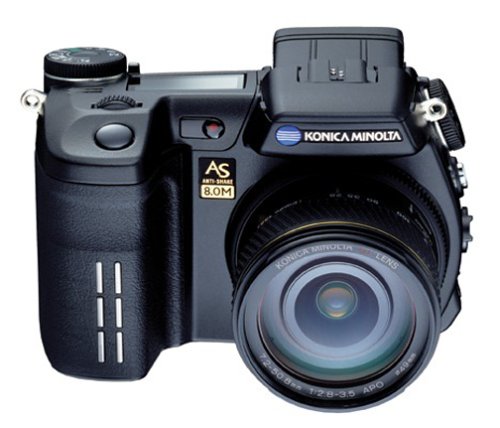
Konica Minolta Dimage A2 8MP Digital Camera with 7x Anti Shake Optical Zoom


For my trip to Madagascar, my primary camera was the Konica Minolta Dimage A2. The camera proved durable (between the heat, humidity, and dust in various parts of Madagascar) and the battery life was respectable. I was especially impressed with the anti-shake (image stabilization) technology that makes pictures crisper especially when using the telephoto. I would highly recommend the Konica Minolta Dimage A2 for anyone from beginners (many auto-features if desired) to advanced photographers.


Product Specifications

  • Number of effective pixels: 8.0 million
  • CCD: 2/3-type interlaced primary-color CCD
  • : Total pixels: 8.3 million
  • A/D conversion: 12 bit
  • Camera sensitivity: Auto, ISO 64, 100, 200, 400, 800 equivalents
  • Focal length: 7.2 - 50.8mm (35 mm equivalent: 28 - 200 mm)
  • Lens construction: 16 elements in 13 groups (includes two AD glass elements and two aspheric elements)
  • Maximum aperture: f/2.8 - f/3.5
  • Minimum focus distance: 0.5m (1.6 ft.) from CCD
  • Macro focus range: At 7.2mm
  • : 30 - 60 cm / 11.8 - 23.6 in. from CCD
  • : 21 - 51 cm / 8.3 - 20 in. from front of lens
  • : At 42.7 - 50.8mm
  • : 25 - 60 cm / 9.8 - 23.6 in. from CCD
  • : 13 - 50 cm / 5.1 - 19.7 in. from front of lens
  • Maximum magnification: 0.177x (1: 5.65)
  • : Equivalent to 0.7x (1: 1.43) in 35mm format
  • Area covered at maximum magnification:
  • : 52 x 39 mm / 2.05 x 1.54in.
  • Optical zooming control: Manual zooming ring
  • Filter diameter: 49mm
  • Viewfinder type: EVF (Electronic viewfinder)
  • : Variable-position: 0-90ş
  • Viewfinder LCD: 11mm (0.44 inch) TFT liquid-crystal microdisplay
  • : Total pixels: 922,000 pixels
  • LCD monitor: 46mm (1.8 inch) low-temperature polysilicon TFT color
  • : Variable-position: -20- 90ş
  • : Total pixels: 118,000
  • Automatic monitor amplification: Activates in low light.:
  • Field of view: EVF: 100% (approx.)
  • : External LCD monitor: 100 % (approx.)
  • Display-mode switch: Auto-display, Electronic-viewfinder display, External LCD-monitor display
  • Diopter control: - 3.5 ~ +1.5 m-1
  • Eye relief: 19.5 mm at -1 m-1
  • Shutter: CCD electronic shutter and mechanical shutter
  • Shutter speed range: 30 - 1/4000s
  • : Bulb (max. 30 s)
  • Autofocus system: Video AF
  • Autofocus areas: Wide focus area, Spot focus point
  • : Flex Focus Point control is available with the spot focus point.
  • Focus modes: Autofocus: Single-shot AF, Continuous AF, Full-time AF, Subject Tracking AF.
  • : Manual focus with 3.3x or Flex Digital Magnifier (FDM) with 3.3x
  • Full-time AF: With the spot focus point or Flex Focus Point.
  • : Full-time AF can be disabled.
  • Subject Tracking AF: With continuous AF. Subject Tracking AF can be disabled.
  • Focus lock: By pressing shutter-release button partway down.
  • Subject lock: With Subject Tracking AF by pressing shutter-release button partway down.
  • Metering: Multi-segment, Center-weighted, Spot (center or with Flex Focus Point)
  • Multi-segment metering: 300 segments
  • Exposure control range: Programmed AE and aperture-priority modes
  • : Wide: Ev -1.7 - 20
  • : Telephoto: Ev -1.2 - 20.7
  • : Shutter-priority and manual modes
  • : Wide: Ev - 2 - 19
  • : Telephoto: Ev - 1.4 - 19
  • Exposure modes: Programmed AE (with program shift), Aperture priority, Shutter priority, Manual
  • Digital Subject Programs: Portrait, Sports action, Sunset, Night portrait
  • Exposure compensation: ± 2 Ev in 1/3 increments
  • AE lock: With AE-lock button or by pressing the shutter-release button partway down
  • Flash control: ADI, Pre-flash TTL, Manual flash control
  • Flash range: Wide: 0.5 - 3.8m / 1.6 - 12.5 ft. (approx.)
  • : Telephoto: 0.5 - 3.0m / 1.6 - 9.8 ft. (approx.)
  • : (Camera sensitivity: auto)
  • Flash modes: Fill-flash, Red-eye reduction, Rear flash sync, Wireless/Remote flash
  • Flash recycling time: 5 s (approx.)
  • Flash compensation: ± 2 Ev in 1/3 increments
  • Flash-sync speed: All shutter speeds
  • External flashes: Auto-flash metering with Program/Maxxum Flash 2500 (D), 3600HS (D), 5600HS (D), Macro Twin Flash 2400,* Macro Ring Flash 1200.*
  • : *Macro Flash Controller is necessary.
  • : Non-dedicated off-camera flash units can be used using the camera's flash-sync terminal.
  • Continuous advance: -UHS continuous advance: 7 fps (640x480)
  • : -High-speed continuous advance: 2.7 fps (max.)
  • : Standard continuous advance: 1.8 fps (max.)
  • Interval recording: 2 - 240 frames
  • : Interval time: 30 s, 1 - 10 min., 15 min., 20 min., 30 min., 45 min., 60 min.
  • : Start time: 0-24h in 0.5h increments.
  • Exposure bracketing: Three-frame bracket in 0.5 and 0.3 Ev increments
  • Digital Enhanced Bracketing: Three-frame contrast, color saturation, or filter bracket in fixed increments.
  • Self-timer: 10s, 2s (approx.)
  • Movie: Standard movie mode: 15 min. (max.) at 30 fps with monaural audio
  • : Night movie mode: 15 min. (max.) at 30 fps with monaural audio
  • : Automatic selection function between standard and night movie modes available.
  • : Time-lapse movie mode: no audio and played back at 4 fps
  • Audio: Voice memo: 15s (max.) monaural audio with still image
  • Color modes: Natural Color (sRGB), Vivid Color (sRGB), Adobe RGB, Embedded Adobe RGB, Black and white (neutral and toned), Solarization
  • Camera color spaces: sRGB, Adobe RGB
  • White-balance control: Automatic
  • : Preset (Daylight, Tungsten, Shade, Cloudy, Flash, and Fluorescent settings) with fine adjustments in seven levels.
  • : Custom (three settings)
  • Sharpness settings: Three levels (Soft, Normal, Hard)
  • Digital Effects Control: Color saturation, Contrast compensation, Filter
  • Noise reduction: User selectable dark noise reduction
  • Digital zoom: 2x with still images
  • Data imprinting: Year/month/day (Format can be changed.)
  • : Month/day/hour:minute
  • : Text
  • : Text and serial numbers
  • : Imprinting can be disabled.
  • Custom functions: Control dial customization.
  • : User-selectable function can be assigned to the function dial.
  • Image-quality modes: RAW, TIFF, Extra fine, Fine, Standard
  • Number of recorded pixels :
  • (Still images): 3264 x 2448, 3264 x 2176(in 3:2 mode), 2560 x 1920, 2080 x 1560, 1600 x 1200, 640 x 480
  • Number of recorded pixels :
  • (Movie clips): 320 x 240 in standard and night movie modes
  • : 544 x 408 in standard and night movie modes
  • : 640 x 480 in time-lapse movie mode
  • File formats: JPEG, TIFF, Motion JPEG (MOV), RAW, WAVE
  • : DCF 2.0-compliant
  • : DPOF-compliant (Supported by printing functions in ver. 1.1)
  • : Exif 2.21
  • Printing output control: Exif Print, PRINT Image Matching II
  • : PictBridge
  • Recording media: Type I and Type II CompactFlash cards
  • : IBM Microdrive (170MB, 340MB, 512MB, 1GB)
  • Computer interface: USB (*2.0 High speed)
  • AV output: NTSC, PAL (selected on the camera)
  • Batteries: One NP-400 lithium-ion battery
  • Battery performance (Playback): Approximate continuous playback time: 240 min. with NP-400 lithium-ion battery, External LCD monitor on, EVF off.
  • Battery performance (Recording): Approximate number of recorded images: 280 frames with NP-400 lithium-ion battery, EVF off, External LCD monitor on, Full-size images (3264 x 2448), Fine image quality, No instant playback, No voice memo, Flash used with 50% of the frames.
  • External power source: 6V DC with specified AC adapter (sold separately)
  • Dimensions: 117 (W) x 85 (H) x 113.5 (D) mm
  • : (4.61 (W) x 3.35 (H) x 4.47 (D) in.)
  • Weight: 565 g (19.9 oz.) without batteries or recording media (approx.)
  • Operating temperature: 0-40 şC (32-104 şF)


  • Find a mistake? Want to submit pictures or content? Contact WildMadagascar.org

    Almost all pictures on this site were taken with a Konica Minolta


    WILDMADAGASCAR.ORG
    WildMadagascar.org aims to raise interest in Madagascar, a land of cultural and biological richness

    Madagascar
    Madagascar Pictures
    Madagascar News
    People of Madagascar
    About the site
    Educational materials
    Help Madagascar
    In French


    SUPPORT
    You can help support wildmadagascar.org by using this link to buy from Amazon.com.


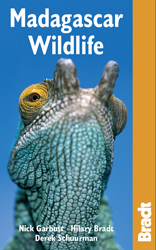
    Beautifully illustrated with full color photographs throughout, Madagascar Wildlife is a celebration of the unique fauna of a remarkable island and the perfect accompaniment to Bradt's popular general travel guide, Madagascar.


    RECENT NEWS

    Mining and biodiversity offsets in Madagascar

    (08/30/2009) Rio Tinto's ilmenite mine in southeastern Madagascar is among the largest on the planet. At peak capacity, its owners say, it could produce as much as 2 million tons of the stuff—worth roughly $100 a ton—each year, to be shipped off and smelted abroad. What's left of it after refining—some 60 percent of the ore that arrives from Madagascar—will be sold for $2000 a ton as titanium dioxide, a pigment used in everything from white paint and tennis court lines to sunscreen and toothpaste.


    Destruction worsens in Madagascar

    (08/20/2009) Armed bands are decimating rainforest reserves in northeastern Madagascar, killing lemurs and intimidating conservation workers, despite widespread condemnation by international environmental groups.


    Appalling photos reveal lemur carnage in Madagascar

    (08/20/2009) New pictures released by Conservation International depict a troubling development in Madagascar: the emergence of a commercial bushmeat market for lemurs. In the aftermath of a March coup that saw Madagascar's president replaced at gunpoint by the capital city's mayor, Madagascar's reserves — especially in the northern part of the country — were ravaged by illegal loggers. Armed bands, financed by foreign timber traders, went into Marojejy and Masoala national parks, harvesting valuable hardwoods including rosewood and ebonies. Without support from the central government — or international agencies that pulled aid following the coup — there was no one to stop the carnage. But now it emerges that timber wasn't the only target.


    Saving the tsingy forests in Madagascar

    (08/17/2009) After the success of their Sahafina Forest project, Biodiversity Conservation Madagascar is now branching out to the tsingy forest of Beanka, a project set to launch in October this year. Biodiversity Conservation Madagascar (BCM) has been granted a 25-year lease on a 14,000-hectare area of dry hardwood forest, the Beanka tsingy, situated 75 km east of Maintirano in western Madagascar. 'Tsingy' are spectacular razor-sharp limestone pinnacles found on the west and north of the island, formed by acidic rain erosion. The deciduous forests that inhabit them are characterized by high plant and animal endemism. The Malagasy organization plans to apply the same principles here – protection of the forest, socio-economic development and forest restoration – that brought them success with their last project, the 2,500-hectare forest block of Sahafina on Madagascar’s east coast.


    Lessons from the crisis in Madagascar, an interview with Erik Patel

    (08/11/2009) On March 17th of this year the President of Madagascar, Marc Ravalomanana, resigned his post. This made way for Andry Rajoelina, mayor of Madagascar's capital, to install himself as president with help from the military. The unrest and confusion that usually accompanies such a coup brought disaster on many of Madagascar's biological treasures. Within days of Ravalomanana's resignation, armed gangs, allegedly funded by Chinese traders, entered two of Madagascar's world-renowned national parks, Marojejy and Masoala parks, and began to log rosewood, ebonies, and other valuable hardwoods. The pillaging lasted months but the situation began to calm down over the summer. Now that the crisis in Madagascar has abated—at least for the time being—it's time to take stock. In order to do so, Mongabay spoke to Erik Patel, an expert on the Critically Endangered Silky Sifaka and frequent visitor to Madagascar, to find out what the damage looks like firsthand and to see what lessons might be learned.


    Despite violent protests and coup, Daewoo continues to hold cropland in Madagascar

    (06/19/2009) Despite violent protests that have left more than 100 dead and led to the ouster of a democratically-elected president, Daewoo Logistics Corp. continues to hold 218,000 hectares of cropland in Madagascar, according to a new campaign by Rainforest Rescue.


    Conservation success in Madagascar proves illusory in crisis

    (06/12/2009) Despite the popularity he enjoyed abroad, domestic support for ousted president Marc Ravalomanana eroded rather quickly last February when he went head to head with Andry Rajoelina, the rookie mayor of Madagascar's capital. Rajoelina rallied disparate opposition groups to the cause and soon toppled the incumbent to become, at his own proclamation, President of the "High Authority of Transition." For the country as a whole, the results have not been encouraging. The tourism industry has shriveled to a shadow of itself, important donors have suspended non-humanitarian aid, and a power vacuum has set in in remote regions of the island, wreaking havoc on some of its most fragile and prized ecosystems.


    Forest Recovery Programs in Madagascar

    (06/01/2009) Despite being one of the last habitable land masses on earth to be settled by man, Madagascar has lost more of its forests than most countries; less than 10% of its original forest cover now remains, and much of that is degraded. Political turmoil that erupted earlier this year continues to rumble on and the ensuing lawlessness has created the opportunity for illegal logging syndicates to plunder national parks, most notably Marojejy and Masoala, for valuable hardwoods and wildlife.


    Approximately 200 new frogs discovered in Madagascar threatened by political instability

    (05/11/2009) Amid the amphibian extinction crisis—where amphibians worldwide are disappearing due to habitat loss, pollution, and a devastating fungal epidemic—the Spanish Scientific Research Council (CSIC) has announced some good news. In a survey of the island-nation of Madagascar they have identified between 129 and 221 new species of frogs. The discovery of so many new species nearly doubles the island's total number of frogs.

    More news


    This portable guide offers a full survey of all Madagascar's mammals, both endemic and introduced, including many newly identified species. With vivid color photographs, line illustrations, and maps, Mammals of Madagascar: A Complete Guide is an essential book for any visitor.


    GEAR

  • Madagascar Wildlife T-shirt
  • Dancing lemurs T-shirt
  • Madagascar Chameleons Calendar
  • Madagascar wildlife bag


  • home | photos index | search | about | contact

    Unless otherwise noted, all content and images are the property of Rhett Butler, content copyright 2004-2009.
    All rights reserved.