Madagascar: stunning wildlife, landscapes, and cultural diversity
WildMadagascar.org highlights Madagascar's stunning wildlife, landscapes, and cultural diversity.
Madagascar is a land like no other. An island roughly the size of Texas or France, Madagascar is home to more than 250,000 species of which 70% are found nowhere else on the globe.
Geography: Madagascar can be divided into five geographical regions: the east coast, the Tsaratanana Massif, the central highlands, the west coast, and the southwest. The highest elevations parallel the east coast, whereas the land slopes more gradually to the west coast. Geography of Madagascar
Culture: are of the past; where in many areas taboo and tradition takes precedence over the law; and western-style religion is freely mixed with beliefs in sorcery and unparalleled funerary customs. The People of Madagascar
Plant biodiversity: Madagascar is home to as many as 12,000 plant species -- 70-80% of which are endemic -- making it one of the most diverse floras on the planet. Flora of Madagascar.
Animal biodiversity: Madagascar has some of the highest biodiversity on the planet. Of roughly 200,000 known species found on Madagascar, about 150,000 are endemic. Unique to the island are more than 50 types of lemurs, 99 percent of its frog species, and 36 genera of birds. Madagascar houses 100 percent of the world's lemurs, half of its chameleon species, 6 percent of its frogs, and none of its toads. Some species found in Madagascar have their closest relatives not in Africa but in the South Pacific and South America. Wildlife of Madagascar.
Madagascar News
Finance and Indigenous rights top Africans’ agenda as biodiversity summit opens in Yerevan (October 19, 2026)
- As the U.N. Convention on Biological Diversity’s 17th summit kicks off in Yerevan, Armenia, on Oct. 19, conservationists say more needs to be done in Africa. - To meet the global goal of 30 by 30, around 15% more of Africa’s terrestrial and marine territory needs to be protected. - Funding remains a substantial hurdle as highlighted at the recent oceans conference in Kenya where a review of funding pledged to protect Africa’s oceans since 2014 found $14.3 billion was promised, but only $5.8 billion delivered. Australian authorities seize 100,000 live cockroaches in crackdown on exotic insect trade (June 15, 2026) 
- Australian authorities seized more than 100,000 exotic cockroaches from a breeder in New South Wales. - The confiscated insects include Madagascar hissing cockroaches, endemic to the island country of Madagascar, and dubia roaches, which are popular both as reptile food and collected as pets. - Importing exotic insects is illegal in Australia, as they can become invasive or carry disease, and they cannot be legally kept, bred or sold. - The seizure highlights the unregulated but growing trade in invertebrates across the world, especially as food for increasingly popular reptile pets. How silk caterpillars became a tool for conservation in Madagascar (June 10, 2026) 
- Catherine Craig’s conservation work began with field biology, from chimpanzees at Gombe to decades of research on spiders, silk and insect behavior. - In Madagascar, she developed a conservation enterprise built around native silk-producing caterpillars, border forests and new sources of income for farmers and artisans. The project’s endurance depended on Malagasy leadership, patient work with communities and a willingness to adapt when markets, weather and local needs changed. - After more than two decades, Craig stepped back from daily leadership, leaving the program financially secure and increasingly governed by the people who built it locally. - Craig spoke with Mongabay founder and CEO Rhett Ayers Butler in June 2026. New survey methods uncover new insights into Madagascar’s biodiversity (May 21, 2026) 
- LIFEPLAN tracks arthropods, fungi, mammals and birds simultaneously using identical methods repeated year-round across continents, generating one of the largest standardized biodiversity data sets ever assembled. - A forthcoming study found that geographic distance is a key driver of endemism in Madagascar’s arthropods. - Entomologists use LIFEPLAN data to identify new priority areas for insect conservation that are not represented in the current protected area network. - Researchers say they hope LIFEPLAN methods can support long-term biodiversity monitoring in Madagascar’s protected areas in collaboration with different partners. Fire at WCS Makira Natural Park office allegedly linked to patrol efforts (May 18, 2026) 
- An angry crowd allegedly set fire to a site office of the Wildlife Conservation Society (WCS) in Ambinanitelo Maroantsetra, in northeastern Madagascar, on May 4. - Photos circulating on social media show that the office was destroyed; the staff are believed to be safe. - Six men were allegedly caught logging in the core of Makira Natural Park, managed by WCS. An environment ministry official suggested that their capture angered nearby residents. - Local authorities are waiting for tensions to subside before resuming the probe, as they say it might place WCS staff and park personnel at risk. Tropical forest loss falls in 2025, but world still off track on deforestation goals (April 29, 2026) 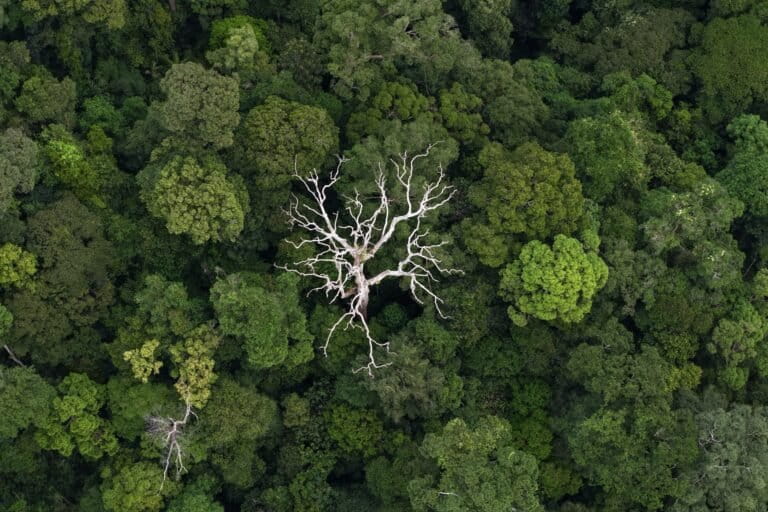
- Tropical primary forest loss fell sharply in 2025, down 36% from 2024, but the decline may reflect fewer fires rather than sustained progress. - Despite the drop, the world still lost an area of tropical primary forest larger than Switzerland last year, leaving countries far off track from their 2030 goal of ending deforestation. - Smaller forest-rich countries are losing remaining forests fastest, while major forest nations like Brazil show gains linked to stronger enforcement. - Climate-driven fires, weak governance and commodity pressures continue to drive forest loss, making recent gains fragile and uncertain. Why forest conservation is also public health (April 22, 2026) 
- A new study from Madagascar provides the first complete mitochondrial genomes for two endemic tuft-tailed rats, offering a clearer baseline for identifying and tracking native rodent species. - Fieldwork found these native rodents only in intact forest, while degraded areas were dominated by invasive black rats, suggesting a shift in community composition linked to habitat change. - Understanding which rodent species are present, where they live, and how their populations change is critical not just for biodiversity, but for identifying how pathogen dynamics may shift across landscapes. - The research illustrates how improved ecological monitoring can connect conservation and public health, supporting the view that protecting ecosystems and managing disease risk are closely linked. A reforestation corridor in Madagascar offers a future for lemurs and locals (April 14, 2026) 
- A reforestation corridor project aims to reconnect 150 hectares of fragmented forest between Andasibe-Mantadia National Park and the Analamazoatra Special Reserve, home to a dozen lemur species and many other animals and plants that are found nowhere else on Earth. - Led by the Mad Dog Initiative in partnership with The Dr. Abigail Ross Foundation for Applied Conservation, Association Mitsinjo and Ecovision Village, the project represents a unique convergence of science, private investment and community action. - The project has already planted more than 100 native tree species across 70 hectares, a portion of which were grown in soil inoculated with mycorrhiza, with seedlings showing high survival and growth rates. Even in its early stages, lemurs are using the corridor. - To address local challenges and increase the chances of long-term restoration success, project partners are investing in ecotourism, health care and education, among other strategies. An invasive guava is muscling out Madagascar’s forests — and lemurs are helping (March 31, 2026) 
- The island of Madagascar is a hotspot for animal and plant biodiversity, but since the 1950s it has suffered high rates of deforestation. - Once damaged, these forests are susceptible to takeover by a nonnative plant invader, the strawberry guava tree originally from Brazil. - The guavas produce delicious fruit that the lemurs relish and whose seeds the lemurs themselves help to spread. - Conservationists say forest restoration, critical to the survival of lemurs, needs to take into account the pernicious effects that strawberry guavas have on the ecology of forests — both those that are still intact, and those that are being restored. Beetle known for ravaging mango trees now killing baobabs, study finds (March 5, 2026) 
- Researchers say baobabs face a potential new threat from the mango stem borer, a beetle long known to devastate other trees. - The warning comes from research in Oman, where scientists found the pest had killed six baobabs and severely infested a dozen more in a small valley population. - Authorities there are fighting the infestation with pesticides, light traps and manual removal of larvae from the trees. - Scientists note that similar infestations have not yet been recorded in other countries where baobabs grow. Justin Claude Rakotoarisoa, a guardian of Madagascar’s amphibians, has died, aged 45 (March 2, 2026) 
- Madagascar contains an exceptional share of the world’s frog diversity, most of it found nowhere else, making local conservation efforts decisive for species survival. Justin Claude Rakotoarisoa, a guide from the Andasibe region, became one of the people working to keep those species from disappearing. - Through the community organization Mitsinjo, he helped establish and run a captive-breeding facility that maintained threatened amphibians as insurance against habitat loss and disease, while also contributing new scientific knowledge about their life cycles. - Largely self-taught, he served as a bridge between international researchers and local communities, translating technical knowledge into Malagasy and sharing what he knew with students, journalists, and younger conservation workers. - His life illustrated how effective conservation in Madagascar often depends less on distant institutions than on persistent local effort — people willing to perform careful, unglamorous work year after year to keep fragile species alive. Measuring biodiversity in a world of tree-planting pledges (January 12, 2026) 
- The Global Biodiversity Standard (TGBS) is a certification scheme for forest restoration projects that show positive outcomes for biodiversity. - Each assessment includes a field visit by experts from regional hubs, who have been trained in TGBS methodology. - The regional hubs also offer ongoing mentoring to projects, to promote internationally recognized best practices in restoration. - One year on, TGBS has certified six sites, and 15 regional hubs offer mentoring. |
Overviews - by language
Arabic
Chinese-simplified
Chinese-traditional
Croatian
Czech
English
Farsi
French (expanded)
German
Greek
Hindi
Indonesian
Japanese
Italian
Malagasy (rainforests)
Malay
Portuguese
Portuguese (Brazil)
Romanian
Russian
Spanish
Slovak
Ukrainian
Overviews - by language
About Madagascar
Maps
FAQs
People
History
Flora
Wildlife
Birds
Fish
Frogs
Invertebrates
Lemurs
Mammals
Reptiles
Environment
Conservation
ANGAP
Parks
Educational
Madagascar Travel
About the site
How to help
Contact
Overviews - by language
Rainforests
Deforestation
Environmental news
Tropical fish
Books
Madagascar, 9th: The Bradt Travel Guide
Madagascar Wildlife, 3rd: A Visitor's Guide
Mammals of Madagascar: A Complete Guide
Madagascar Travel Pack
Birds of the Indian Ocean Islands
Birds of Madagascar: A Photographic Guide
Lonely Planet Madagascar & Comoros
The Natural History of Madagascar
Malagasy-English: Dictionary and Phrasebook
Lords and Lemurs
The Eighth Continent: Life, Death, and Discovery in the Lost World of Madagascar
The Aye-Aye and I : A Rescue Journey to Save One of the World's Most Intriguing Creatures from Extinction
Shadows in the Dawn: The Lemurs of Madagascar