Home
 About Madagascar
  Maps
  FAQs
  People
  History
  Environment
 Flora
 Wildlife
  Birds
  Fish
  Frogs
  Invertebrates
  Lemurs
  Mammals
  Reptiles
 Places
  Antananarivo
 Conservation
  ANGAP
  Parks
  Guides
  News
 Photos
 Educational
 Media resources
 Madagascar News
 Store
 Madagascar Travel
 About the site
 How to help
 Books
 Links
 Contact


News from Madagascar


Gibson Guitar under federal investigation for alleged use of illegal rainforest timber from Madagascar
(11/19/2009) Federal agents from the U.S. Fish and Wildlife Service raided Gibson Guitar's factory Tuesday afternoon, due to concerns that the company had been using illegally harvested wood from Madagascar, reports the Nashville Post.


Forgotten species: Madagascar's water-loving mammal, the aquatic tenrec
(11/12/2009) There are many adjectives one could attach to the aquatic tenrec: rare, mysterious, elusive, one-of-a-kind, even adorable, though one tries to stray from such value-laden titles since it excludes so many other non-adorable inhabitants of the animal kingdom. This small and, yes, cute insectivore, also known as the web-footed tenrec, lives in Eastern Madagascar where at night it spends the majority of its time swimming and diving in fast-moving streams for insects and tadpoles. It sleeps during the day in small streamside burrows. To date that is about the extent of our knowledge of this species.


House resolution condemns plunder of natural resources in Madagascar
(11/04/2009) A House of Representatives resolution introduced by Earl Blumenauer (D-Oregon) condemns the illegal plundering of natural resources in Madagascar, reports the Wildlife Conservation Society (WCS).


Rosewood traffickers busted in Madagascar
(10/28/2009) Authorities in Madagascar have sacked a local official, arrested several businessmen, and issued fines following the discovery of illegally harvested rosewood logs aboard a ship, reports L'Express de Madagascar.


World's largest golden orb weaving spider discovered in South Africa and Madagascar
(10/21/2009) Golden orb weaving spiders have been garnering media attention recently. Last year stunning photographs of a golden orb weaver eating a bird in Australia made world coverage. Now, over a century after the last legitimate species of golden orb weaver was discovered, researchers have announced the discovery of a new and rare species of golden orb weaving spider in Africa and on the island of Madagascar. On average the new species is the largest of all golden orb weavers known.


Government decree sanctions trafficking of rainforest timber in Madagascar
(10/07/2009) A new decree by Madagascar's transitional government may fuel continued destruction of the country's tropical forests and biodiversity, warns a statement issued jointly by a dozen leading scientific and conservation groups.


Good news for the rarest lemur
(10/07/2009) A scientific expedition has found one of the Madagascar's rarest lemurs in a region where it was once thought to be extinct, report conservationists.


Innovative reforestation project threatened by 'regime change' in Madagascar, an interview with Rainer Dolch
(09/16/2009) In Madagascar the TAMS Program (Tetik'asa Mampody Savoka, meaning "the project to bring back the forest") is under threat due to the new government's unwillingness to provide funding. The current government, after gaining power in a coup this year, has frozen all funds slated for the project and has yet to sign a carbon credit agreement with the World Bank which would bring much needed funding. "It remains to be seen if the recognition or not of Madagascar's transitional Government will lead to signing the contract with the World Bank in the near future. This is of course essential for the continuity of the project and its future," Rainer Dolch told Monagaby.com in an interview.


Crowned sifaka population on the verge of local extinction: dispatch from the field
(09/08/2009) A small group of crowned sifaka lemurs Propithecus coronatus have been located in the corridor d’Amboloando-Dabolava, Miandrivazo district-Madagascar, but are immediately threatened with local extinction. The small, fragmented, and isolated forest shelters a group of only six adults and one baby. Interviews with local people revealed that once several groups of the species resided in the corridor, and even last year, about 20 individuals were still found there. However, within one year, the population dropped from 20 to 6 individuals.


Mining and biodiversity offsets in Madagascar: Conservation or 'Conservation Opportunities?'
(08/30/2009) Rio Tinto's ilmenite mine in southeastern Madagascar is among the largest on the planet. At peak capacity, its owners say, it could produce as much as 2 million tons of the stuff—worth roughly $100 a ton—each year, to be shipped off and smelted abroad. What's left of it after refining—some 60 percent of the ore that arrives from Madagascar—will be sold for $2000 a ton as titanium dioxide, a pigment used in everything from white paint and tennis court lines to sunscreen and toothpaste. At current levels of demand, the Fort Dauphin mine will provide 9 percent of the world supply over the next 40 years, amounting to more than $60 billion of titanium dioxide. Even that is a conservative estimate: demand for ilmenite has been growing at 3-5 percent annually, with major mines slated to close in coming years and few untapped sources known worldwide.


World's rarest duck flies closer to extinction's edge
(08/27/2009) The Madagascar pochard, the world's rarest duck, was already thought to be extinct once. After a last sighting in 1991 the species was thought to have vanished until nine adults and four hatchlings were discovered in 2006. However, conservationists have begun to fear that the species will never recover after a survey this year found only six females.


Destruction worsens in Madagascar
(08/20/2009) Armed bands are decimating rainforest reserves in northeastern Madagascar, killing lemurs and intimidating conservation workers, despite widespread condemnation by international environmental groups.


Appalling photos reveal lemur carnage in Madagascar [warning: graphic images]
(08/20/2009) New pictures released by Conservation International depict a troubling development in Madagascar: the emergence of a commercial bushmeat market for lemurs. In the aftermath of a March coup that saw Madagascar's president replaced at gunpoint by the capital city's mayor, Madagascar's reserves — especially in the northern part of the country — were ravaged by illegal loggers. Armed bands, financed by foreign timber traders, went into Marojejy and Masoala national parks, harvesting valuable hardwoods including rosewood and ebonies. Without support from the central government — or international agencies that pulled aid following the coup — there was no one to stop the carnage. But now it emerges that timber wasn't the only target.


Saving the tsingy forests in Madagascar
(08/17/2009) After the success of their Sahafina Forest project, Biodiversity Conservation Madagascar is now branching out to the tsingy forest of Beanka, a project set to launch in October this year. Biodiversity Conservation Madagascar (BCM) has been granted a 25-year lease on a 14,000-hectare area of dry hardwood forest, the Beanka tsingy, situated 75 km east of Maintirano in western Madagascar. ‘Tsingy’ are spectacular razor-sharp limestone pinnacles found on the west and north of the island, formed by acidic rain erosion. The deciduous forests that inhabit them are characterized by high plant and animal endemism. The Malagasy organization plans to apply the same principles here – protection of the forest, socio-economic development and forest restoration – that brought them success with their last project, the 2,500-hectare forest block of Sahafina on Madagascar’s east coast.


Historical deforestation in Madagascar may not be as bad as commonly believed
(08/12/2009) The long-held assumption that Madagascar has lost 90 percent of its forest cover due to fire and slash-and-burn agriculture may be overstated, argues new research published in Conservation Letters. Analyzing 6000-year pollen records in four sites, Malika Virah-Sawmy of Oxford University found evidence that vegetation in southeast Madagascar has for millennia been a mosaic of forests, woodlands and savannas, rather than continuous forests as generally believed. Virah-Sawmy says the findings demonstrate the importance of conserving Madagascar's remaining ecosystems as a buffer against climate change.


Lessons from the crisis in Madagascar, an interview with Erik Patel
(08/11/2009) On March 17th of this year the President of Madagascar, Marc Ravalomanana, resigned his post. This made way for Andry Rajoelina, mayor of Madagascar’s capital, to install himself as president with help from the military. The unrest and confusion that usually accompanies such a coup brought disaster on many of Madagascar's biological treasures. Within days of Ravalomanana's resignation, armed gangs, allegedly funded by Chinese traders, entered two of Madagascar’s world-renowned national parks, Marojejy and Masoala parks, and began to log rosewood, ebonies, and other valuable hardwoods. The pillaging lasted months but the situation began to calm down over the summer. Now that the crisis in Madagascar has abated—at least for the time being—it’s time to take stock. In order to do so, Mongabay spoke to Erik Patel, an expert on the Critically Endangered Silky Sifaka and frequent visitor to Madagascar, to find out what the damage looks like firsthand and to see what lessons might be learned.


Madagascar issues fines for timber stolen from national parks during political crisis
(08/03/2009) Authorities in Madagascar have blocked shipment of 176 containers of rosewood and other valuable timber from Vohémar port, pending payment of 72 million Malagasy ariary ($37,500) in fines reports Noro Niaina of Les Nouvelles. The wood was illegally harvested from Marojejy and Masoala National Parks during the chaos that followed a March military coup on the Indian Ocean island nation.


REDD shouldn't neglect biodiversity say scientists
(07/30/2009) Schemes to mitigate climate change by protecting tropical forests must take into account biodiversity conservation, said two leading scientific organizations at the conclusion of a four day meeting in Marburg, Germany.


Photos: 5 baby lemurs born at the Bronx Zoo
(07/23/2009) Five baby lemurs have been born at the Bronx Zoo's Madagascar exhibit in the year since it opened, reports the Wildlife Conservation Society.


Tiny bat discovered on islands off Africa
(06/25/2009) The Natural History Museum in Geneva, Switzerland has announced the discovery of a bat species new to science on the Comoros Island arichpelago off the south-east coast of Africa. The bat weighs only 5 grams (0.17 ounces).


Despite violent protests and coup, Daewoo continues to hold cropland in Madagascar
(06/19/2009) Despite violent protests that have left more than 100 dead and led to the ouster of a democratically-elected president, Daewoo Logistics Corp. continues to hold 218,000 hectares of cropland in Madagascar, according to a new campaign by Rainforest Rescue.


Conservation success in Madagascar proves illusory in crisis
(06/12/2009) Despite the popularity he enjoyed abroad, domestic support for ousted president Marc Ravalomanana eroded rather quickly last February when he went head to head with Andry Rajoelina, the rookie mayor of Madagascar's capital. Rajoelina rallied disparate opposition groups to the cause and soon toppled the incumbent to become, at his own proclamation, President of the "High Authority of Transition." For the country as a whole, the results have not been encouraging. The tourism industry has shriveled to a shadow of itself, important donors have suspended non-humanitarian aid, and a power vacuum has set in in remote regions of the island, wreaking havoc on some of its most fragile and prized ecosystems.


World’s rarest tortoises stolen
(06/08/2009) Four of the world's rarest tortoises have been stolen from a captive breeding program in Madagascar. The critically endangered animals were part of a group of 44 due for release by the Durrell Wildlife Conservation Trust and were being held in pre-release enclosures at a secret location. The Trust fears the stolen ploughshare tortoises are destined for Europe, USA or Asia where collectors will pay thousands of dollars for individuals due to the rarity of the species. It is estimated that only 500 adults remain in the wild and they are only found in Baly Bay national park, where the tortoises were taken from. After extensive investigations in the area arrests have been made but the tortoises are yet to be recovered.


International community calls for action against gangs’ illegal logging in Madagascar
(06/08/2009) Six nations and three conservation organizations have issued a statement calling for action against illegal logging in Madagascar’s protected areas.


Forest Recovery Programs in Madagascar
(06/01/2009) Despite being one of the last habitable land masses on earth to be settled by man, Madagascar has lost more of its forests than most countries; less than 10% of its original forest cover now remains, and much of that is degraded. Political turmoil that erupted earlier this year continues to rumble on and the ensuing lawlessness has created the opportunity for illegal logging syndicates to plunder national parks, most notably Marojejy and Masoala, for valuable hardwoods and wildlife.


Rich countries buy up agricultural land in poor countries
(05/26/2009) Over two-and-half million hectares in the Democratic Republic of the Congo; half a million hectares in Tanzania; and a quarter of a million hectares in Libya: these figures represent just some of the recent international land deals where wealthy countries buy up land in poorer nations for food, and sometimes biofuel, production. The controversial trend has sparked a recent report from the International Food Policy Research Institute (IFPRI) highlighting what nations have to gain—and lose—from participating in such deals.


Approximately 200 new frogs discovered in Madagascar threatened by political instability
(05/11/2009) Amid the amphibian extinction crisis—where amphibians worldwide are disappearing due to habitat loss, pollution, and a devastating fungal epidemic—the Spanish Scientific Research Council (CSIC) has announced some good news. In a survey of the island-nation of Madagascar they have identified between 129 and 221 new species of frogs. The discovery of so many new species nearly doubles the island’s total number of frogs.


Rainforest pillage continues in Madagascar
(04/16/2009) Gangs of illegal rosewood loggers continue to pillage the wildlife-rich forests of northeastern Madagascar, reports a local source.


Hopeful conservation news emerges out of Madagascar political crisis
(03/31/2009) A bit of hopeful conservation news has finally emerged out of the political crisis in Madagascar, report local sources. Wednesday representatives from several NGOs active in conservation in Madagascar met with a minister from island nation's new government. The minister said his top priority was putting an end to illegal logging that emerged when rangers abandoned their posts and armed gangs moved into protected areas in the wake of the political crisis.


Conservation groups condemn 'open and organized plundering' of Madagascar's natural resources
(03/30/2009) Eleven conservation organizations—including WWF, CI, and WCS—have banded together to condemn logging in Madagascar's world renowned parks during a time of political crisis. Taking advantage of the turmoil after interim president Andry Rajoelina took control of the country in a bloodless coup from former president Marc Ravalomanana on March 17th, pristine forests have been plundered for valuable wood, wildlife trafficking has increased, and illegal mining operations have begun say the conservation organizations.


Scramble to log Madagascar's valuable rainforest trees in midst of crisis
(03/23/2009) Armed gangs are logging rosewood and other valuable hardwoods from Marojejy and Masoala parks in Madagascar following abandonment of posts by rangers in the midst of the island nation's political crisis, reports marojejy.com and local sources.


Frogs are an important food source for people in parts of Madagascar
(03/23/2009) With its famous diversity of frog species, Madagascar has long been targeted by smugglers for the pet trade. While this threat is relatively well understood, less known is the domestic market for edible frogs. Writing in Tropical Conservation Science, researchers from the University of Aberdeen and institutions in Madagascar provide a glimpse into this activity.


Political turmoil in Madagascar threatens lemurs, parks
(03/19/2009) Political turmoil in Madagascar has wrecked the country's emerging ecotourism industry and is now threatening to undo decades of conservation work. Conservation in Madagascar is highly dependent on income from tourism. Half of park entrance fees are returned to communities living in and around protected areas. Without this source of income, locals in some areas may turn to conservation areas for timber, fuelwood, agricultural land, and wildlife as food and for export.


Political violence in Madagascar may lead Daewoo to abandon controversial farm project
(02/10/2009) Political instability and low commodity prices may lead South Korea's Daewoo Logistics to delay or pull out of a controversial agricultural project in Madagascar, reports Reuters.


Nickle mine in Madagascar may threaten lemurs, undermine conservation efforts
(01/21/2009) One of the world's largest nickel mines will have adverse impacts on a threatened and biologically-rich forest in Madagascar, say conservationists. The $3.8 billion mining project, operated by Canada's Sherritt, will tear up 1,300 to 1,700 hectares of primary rainforest that houses nearly 1,400 species of flowering plants, 14 species of lemurs, and more than 100 types of frogs. Many of the species are endemic to the forest. While Sherritt says on its web site that is working to minimize its environmental impact, including moving endangered wildlife, replanting trees, and establishing buffer zones near protected areas, conservationists say that efforts are falling short.


Madagascar hit by deadly vanilla-killing fungus
(12/08/2008) Madagascar, the world's largest producer and exporter of vanilla, has been hit by a deadly, incurable fungus that can kill vanilla plants before their pods reach maturity, reports The Associated Press. The development could have dire impacts for the country's vanilla industry which generates hundreds of millions of dollars per year for the impoverished Indian Ocean island nation.


Madagascar denies 'land grab' by South Korean conglomerate
(11/22/2008) Officials from Madagascar are denying they have reached an agreement to turn over half the island nation's arable land to a South Korean corporation for food production, reports Reuters. The controversial deal — which would have paid Madagascar nothing and turned over 1.3 million hectares to produce corn and palm oil for export at a time when one-third of country's children are malnourished — was reported last week by the Financial Times.


An interview with ringtailed lemur expert Alison Jolly
(10/06/2008) Madagascar has more than 100 types of lemurs, but the most famous species is the ringtailed lemur, a primate found widely in the southern part of the Indian Ocean island. The world's leading expert on ringtailed lemurs is Alison Jolly, presently a Visiting Scientist at the University of Sussex in the UK. Since arriving on the Indian Ocean island in 1963, Jolly has documented the behavior and population dynamics of ringtailed lemurs in Berenty, a small private reserve of gallery forest amid a sea of desert-like spiny forest in southern Madagascar.


Dell becomes carbon neutral by saving endangered lemurs
(08/06/2008) Dell, the world's largest computer maker, announced it has become the first major technology company to achieve carbon neutrality.


Developing the world's most sophisticated program for mapping endangered species
(08/04/2008) It was big news in April when a comprehensive map of Madagascar's rich and unique biodiversity was unveiled. The project managed to map ranges of 2,315 species across an island larger than France. Such detailed mapping could not have happened without the aid of Steve Phillips. A researcher at AT&T, Phillips developed the software that made such detailed and expansive mapping possible.


Adaptation to climate change will be difficult for Madagascar
(07/29/2008) Madagascar's high levels of endemism coupled with its extensive loss and degradation of ecosystems leave its species particularly vulnerable to climate change. A new paper evaluates these risks and sets forth conservation priorities to best maintain the ecological resilience of the island nation.


14 countries win REDD funding to protect tropical forests
(07/24/2008) Fourteen countries have been selected by the World Bank to receive funds for conserving their tropical forests under an innovative carbon finance scheme.


Population of critically endangered lemurs discovered in Madagascar
(07/22/2008) Scientists in Madagascar have discovered a population of greater bamboo lemurs (Prolemur simus), a critically endangered species of primate, in an area more than 400 kilometers away from its only known refuge, reports conservation International.


Madagascar villagers vote to protect sea turtles, see first hatchlings
(07/15/2008) The first hatching of Green Turtles recorded as a direct result of efforts to protect the species in southwest Madagascar has been witnessed by marine conservationists working for British charity, Blue Ventures conservation.


Tiny lemur species discovered in Madagascar
(07/14/2008) Researchers have discovered a previously unknown species of mouse lemur on the island of Madagascar. The find brings the global number of mouse lemurs to 16.


Chameleon has shortest life span of any four-legged animal
(06/30/2008) A newly discovered species of chameleon lives a cicada-like existence, spending the bulk of its short year-long life in its egg, report researchers writing in journal Proceedings of the National Academy of Sciences (PNAS).


Lemurs are key to health of Madagascar's rainforests
(06/12/2008) Lemurs play a key role in the health of Madagascar's tropical rainforests said a renowned primatologist speaking at a meeting of conservation biologists in Paramaribo, Suriname.


Madagascar signs big carbon deal to fund rainforest conservation
(06/11/2008) Madagascar will sell more than nine million tons of carbon offsets to fund rainforest conservation in a newly established protected area. conservationists say the deal protect endangered wildlife, promote sustainable development to improve the economic well-being of people living in and around the park area, and help fight global warming.


Fire monitoring by satellite becomes key conservation tool
(03/26/2008) Remote sensing is increasingly used as a tool for conservation management. Beyond traditional satellite imagery popularized by Google Earth, new sensing applications are allowing researchers located anywhere in the world to track fires, illegal logging and mining, and deforestation in some of Earth's most isolated regions using a computer or handheld device. The Fire Alert System is one example of an application that is harnessing the power of satellites to deliver key data to conservation managers. Developed by Madagascar's ministry of Environment, the International Resources Group, conservation International using data from the University of Maryland and NASA, the Fire Alert System enables near real-time monitoring of fires anywhere on the island of Madagascar, a hotspot of biological diversity. The system, which sends subscribers regular email alerts on newly-detected burning, will eventually be expanded to include all the world's protected areas, allowing managers to detect not only fires but potentially related activities like road building, logging, and even hunting.


Half of Madagascar's amphibians may still await discovery
(03/11/2008) Madagascar is one of the most unique places on Earth for wildlife. When the public thinks of Madagascar's fauna most likely they think of one of the fifty species of lemur. Yet, Madagascar possesses a wealth of endemic wildlife outside of these unique prosimians. For example, to frog-lovers Madagascar is a paradise. The only amphibians living on Madagascar are frogs; the island is devoid of toads, salamanders, or newts. But what it lacks in other amphibians it makes up for in the number and beauty of its frogs. Currently, 240 frogs have been catalogued in Madagascar, 99 percent of which are endemic. Yet, amphibian expert Dr. Franco Andreone believes that, according to recent field studies, this may only be half of the frogs that actually live in Madagascar. Dr. Andreone believes the final tally could reach 500 species!


Madagascar's deforestation rate drops 8-fold in parks
(03/10/2008) Madagascar's deforestation rate in protected areas has fallen by eight-fold since the 1990s according to conservation International and the Malagasy government.


Aye-aye diverged from other lemurs 66M years ago
(02/25/2008) The aye-aye -- a bizarre, nocturnal lemur that taps on trees with its fingers to find its insect prey -- was the first of its family to branch off from the rest of the lemur line some 66 million years ago, report Duke researchers writing in the March 1 issue of Genome Research.


Cyclone batters Madagascar
(02/22/2008) 29 people were reported dead after Cyclone Ivan, a category 3 storm, struck Madagascar. The storm flooded key rice-producing regions in the country and comes a month after Cyclone Fame killed 13 on the island.


10-pound 'Giant Frog From Hell' discovered in Madagascar
(02/18/2008) Researchers have discovered the remains of what may be the largest frog ever to exist.


Madagascar's tortoises at high risk of extinction
(02/07/2008) Madagascar's rare and unique turtles and tortoises face high risk of extinction in the wild if conservation measures are not rapidly put into place, warned a group of scientists meeting to discuss the fate of Madagascar's most threatened repitles.


Giant exploding palm tree discovered in Madagascar
(01/17/2008) A gigantic palm that flowers itself to death and exists as part of an entirely unique genus has been discovered in Madagascar; its name will be published in the Botanical Journal of the Linnean Society on 17 January 2008. The mystery palm has a huge trunk which towers over 18m high and fan leaves which are 5m in diameter - among the largest known in flowering plants. This is the most massive palm ever to be found in Madagascar.


Photos: rare aye-aye lemur born at Bristol Zoo Gardens
(01/16/2008) Born on November 23rd, 2007 at Bristol Zoo Gardens this baby Aye-aye was given the name Raz. According to the EDGE (Evolutionary Distinct and Globally Endangered) organization this is only the second Aye-aye to be hand raised in the UK.


Madagascar increases fines for forest burning
(01/03/2008) Madagascar will increase penalties for people caught setting land-clearing fires on the biodiverse island, according to a report from Deutsche Presse-Agentur.


Madagascar fires mapped with Google Earth in real-time
(10/29/2007) Every year as much as one-third of Madagascar, one of the planet's most biodiverse islands, goes up in flames. Now a new tool gives scientists the ability to monitor and track Madagascar's fires in real-time through the Internet.


Metal workers recycle to escape poverty in Madagascascar
(07/06/2007) A ride across the Madagascar countryside can feel like stepping back in time on this tropical island off the east coast of Africa. There is no bustle of big cities. The Malagasy, as the people of Madagascar are known, live much like their forefathers in small communities where traditions are passed down through the generations. They live without any contemporary conveniences including running water, electricity, automobiles, televisions, or even shoes. They commute on foot, or with larger loads, in a wooden cart pulled by zebu, a type of large, bony oxen. Their houses are mostly constructed from available materials including sticks or bricks of dried mud collected from surrounding rice fields.


UNESCO lists rainforest parks of Madagascar as Heritage sites
(07/02/2007) UNESCO has listed six rainforest parks in Madagascar as World Heritage sites. The announcement comes as the Indian Ocean island nation has moved aggressively to protect its biologically-rich forests from further degradation.


Madagascar rainforests get World Heritage Listing
(06/27/2007) The World Heritage Committee has named the rainforests of Madagascar as one of three new UNESCO World Heritage List sites.


Madagascar's cyclone woes worsen, U.N. calls for more money
(05/16/2007) The United Nations relief arm today more than doubled the appeal it launched just two months ago to help Madagascar as the country tries to recover and rebuild its agriculture after a series of deadly recent cyclones and tropical storms since December.


Madagascar's president calls on Adventists to be "green"
(05/08/2007) Madagascar's president Marc Ravalomanana told some 30,000 Seventh-day Adventists gathered at a church outreach event that they need to help make the country "green" again after decades of deforestation have left the Indian Ocean island nearly denuded, reports the Adventist News Network.


conservation is saving lemurs and helping people in Madagascar
(05/07/2007) Madagascar, an island nation that lies off the coast of southeastern Africa, has long been famous for its unique and diverse species of wildlife, especially lemurs--primates found nowhere else on the planet. In recent years, the island country has also become world-renowned for conservation efforts that are succeeding in spite of extraordinary pressures from a poor population that relies heavily on forest burning for basic subsistence. A large part of this success is due to the early efforts of Patricia Wright, a primatologist who has been working in the country for more than 20 years. Wright led the effort to launch the country's leading protected area and helped Madagascar become a leading global example of conservation despite its economic adversity.


Madagascar' forests are recovering
(05/02/2007) Some of Madagascar's most biologically rich forests appear to be recovering according to research published in the open-access journal PLoS ONE. The study also offers new insight in the forces behind deforestation and the social context of reforestation efforts.


Madagascar adds 15 protected areas
(04/30/2007) Madagascar has added 15 new protected areas covering nearly 1 million hectares (2.4 million acres) of land, reports conservation International (CI). The move will help protect the island's unique wildlife from extinction.


Neon green gecko key to preventing Mauritian plant extinction
(04/17/2007) A vibrantly colored gecko plays a key role in a highly threatened ecological community in Mauritius reports new research published in American Naturalist. Studying plant-animal interactions in Mauritius, an Indian Ocean island famous for its extinct dodo bird, researchers found that a rare plant, Trochetia blackburniana, benefits from its proximity to Pandanus plants because they house high densities of geckos responsible for pollination. The findings, which unusually identify a lizard as a key pollinator, are significant because they provide "valuable management insights for ongoing conservation efforts to save the highly endangered flora of Mauritius.


Tear-sucking moth in Madagascar feeds on bird eyes
(04/10/2007) Biologists have documented the first known case of moths feeding on the tears of birds. The research, published in the January 4 2007 issue of the journal Biology Letters, reports that Hemiceratoides hieroglyphica 'attacks sleeping birds in Madagascar' using its sharply barbed proboscis to penetrate the bird's eye. While similar behvaior has been reported in mammals, this is the first known case of tear-feeding on birds.


Sixth cyclone hits Madagascar; impact 'like tsunami'
(04/03/2007) As the sixth mayor cyclone to hit Madagascar this season tears across the northeast of the impoverished Indian ocean island, a relentless succession of natural disasters has left nearly half a million people in desperate need of humanitarian assistance.


Deadly cyclones hurt conservation efforts in Madagascar
(04/02/2007) As Madagascar braces for the arrival of the sixth major cyclone (Gaya) to hit the Indian Ocean island this season, researchers from a prominent conservation have asked for help in the relief and recovery effort. Local officials with the Bronx Zoo-based Wildlife conservation Society say that the series of storms have left tens of thousands of people homeless, devastated croplands, and diverted already short funds from conservation activities.


Madagascar needs relief help after deadly cyclones
(03/30/2007) A deadly cyclone has struck one of the most biologically diverse parts of the planet, forcing people from their homes and damaging their only source of livelihood. Cyclone Indlala has displaced more than 100,000 people and caused widespread crop losses in northeastern Madagascar according to reports from relief organizations. 100-mph (165 km/h) winds and heavy rains caused considerable damage in coastal areas in the northeastern part of the Indian Ocean island. 95 people were reported dead but there are fears of spreading water-borne disease.


Madagascar cyclones may be boon to vanilla market
(03/27/2007) A string of destructive cyclones that have struck the Indian island nation of Madagascar, off the southeastern coast of Africa, may serve as a boon to the depressed vanilla market. Madagascar, the largest producer of vanilla, will likely see production fall due to the havoc wreaked by the storms, which displaced more than 100,000 people. At the same time, the reduction in supply is sure to boost prices for other growers able to bring product to market.


Amazon, Madagascar, Borneo are top plant biodiversity hotspots
(03/20/2007) A new map devised by biologists at the University of California, San Diego (UCSD) and the University of Bonn in Germany, shows that the Andes-Amazon region of South America, Madagascar, Borneo, and New Guinea reign as the world's hotspots for plant diversity. The researchers say the map will help both prioritize areas for biodiversity conservation and forecast the impact of climate change on plant communities and the ecological services they provide.


Biodiversity extinction crisis looms says renowned biologist
(03/12/2007) While there is considerable debate over the scale at which biodiversity extinction is occurring, there is little doubt we are presently in an age where species loss is well above the established biological norm. Extinction has certainly occurred in the past, and in fact, it is the fate of all species, but today the rate appears to be at least 100 times the background rate of one species per million per year and may be headed towards a magnitude thousands of times greater. Few people know more about extinction than Dr. Peter Raven, director of the Missouri Botanical Garden. He is the author of hundreds of scientific papers and books, and has an encyclopedic list of achievements and accolades from a lifetime of biological research. These make him one of the world's preeminent biodiversity experts. He is also extremely worried about the present biodiversity crisis, one that has been termed the sixth great extinction.


Deforestation causes species extinction in Madagascar
(03/07/2007) Deforestation has already caused the extinction of a large number of endemic insect species on the island of Madagascar, according to new research published in the March edition of the journal Biology Letters. The work suggests that only half the species confined to these forest areas will survive.


Blind pink snake discovered in Madagascar
(02/14/2007) A pink worm-like snake has been rediscovered in Madagascar more than 100 years after it was first found. The snake, which is blind and measures about ten inches long, is described in the February 1, 2007 edition of Zootaxa, a leading taxonomic journal.


Lemurs at risk due to invasion of feral beasts, global warming
(02/07/2007) The lemurs of Madagascar are among the world's most threatened primates. Extensive habitat destruction, hunting, and the introduction of alien species have doomed dozens of species to extinction since humans first arrived on the island within the past 2000 years. Most of the casualties were Madagascar's largest lemurs -- today the biggest lemur is but a fraction of the gorilla-sized giants that once ruled the island. Despite this relative impoverishment of megafauna, Madagascar still boasts nearly 90 kinds of lemurs, all of which are unique to the island (save one species that was probably introduced to some nearby islands). Lemurs display a range of unusual behvaiors from singing like a whale (the indri) to sashaying across the sand like a ballet dancer (the sifaka). Interest in lemurs has helped Madagascar become a global conservation priority, though they are still at risk. Continued deforestation, scattered hunting, and looming climate change all pose significant threats to some lemur populations. One largely unexamined threat comes from introduced species such as the Indian civet and mongoose, but especially dogs and cats that have become feral.


In search of wildlife, while dodging leeches, in Madagascar's unexplored rainforest
(02/05/2007) It is called a rainforest for a reason--because it rains.... and rains. As my field partner, Angelin Razafimanantsoa, and I make our way down muddy mountainsides in the endless downpour, we stop only long enough to pick squirming, bloodthirsty leeches off each other's face. Hours pass as we wade through knee-deep streams rushing over smooth, slippery rocks and thick forest stands. Seven hours ago, we anticipated arriving at our next base camp in three hours' time. Now, as night is falling, it seems we have at least five hours more to go.


Limitations of Global conservation Efforts in Madagascar
(02/04/2007) The success of the conservation efforts in a local context is usually primarily dependent on legal support and financial assistance. Recent experience however suggests that other factors may be just as important. Of particular importance is the management approach taken by the conservation authority. While the financial and regulatory incentives are sufficient in establishing protected areas, they maybe unsuccessful in protecting and maintaining them from local socioeconomic pressures. Madagascar as a case study clearly demonstrates this.


Lemurs communicate by scent
(01/29/2007) Ringtailed lemurs can recognize each other by scent according to a study published in the current issue of the journal Animal Behaviour. The research, conducted by Elizabeth S. Scordato and Christine M. Drea of Duke University, looked at olfactory communication in the ringtailed lemur, a charismatic primate that forms complex social groups led by a dominant female, so see what information is contained within the scent marks of the species.


Rare fish from Madagascar named after renowned ichthyologist
(01/24/2007) An ichthyologist from the Wildlife conservation Society's New York Aquarium received the ultimate honor recently, when a freshwater fish discovered on the African island nation of Madagascar was named after him.


Madagascar conservation & Development journal launches
(12/25/2006) Madagascar Wildlife conservation, a Madagascar-based nonprofit, and the Jane Goodall Institute Switzerland have launched a new journal focused on conservation and development issues in Madagascar.


Madagascar plant may offer new treatment for malaria
(12/25/2006) A plant traditionally used by healers in Madagascar may offer a new way to treat malaria, a mosquito-borne illness that kills 2-3 million people -- mostly children in Sub-Saharan Africa -- per year.


Marine protected areas boost fishing yields
(12/18/2006) A new study conducted on the reefs of Madagascar found that marine protected areas can benefit the fishing industry. The study, authored by Frances Humber, a scientist with conservation group Blue Ventures, found that implementing seasonal fishing closures for octopus boosted returns for fishermen when the closed areas were reopened to fishing after seven months. Octopus yields increased 13 times while the total weight of octopus caught jumped 25 times.


3 new lemur species identified in Madagascar
(11/27/2006) Genetic analysis has revealed three previously unknown species of lemurs on the Indian Ocean island of Madagascar. The newly described lemurs are all mouse lemurs, one of the world's smallest primates. These lively lemurs are found in virtually all of Madagascar's forests where they feed on insects, fruit, and plant sap. Nocturnal, mouse lemurs betray their presence with high-pitched chirps.


As presidential election approaches, Madagascar's lemur sanctuary burns
(11/23/2006) Forest fires are burning crucial lemur habitat and other hotbeds of biodiversity in Madagascar according to reports from the northeastern part of the island. The upcoming presidential election -- a bitterly contested poll -- may be partially to blame for the upswing in destruction says a leading local conservationist. Madagascar, a biologically rich, but economically poor island country located off the southeastern coast of Africa is almost as famous for its environmental problems as for its lemurs, a charismatic group of primates found nowhere else on Earth. The country is home to some 90 types of lemurs as well as a bonanza of other rare and unusual creatures including a puma-like mongoose, spiny hedgehog-like beasts called tenrecs, and absurdly colorful chameleons. But these creatures are highly threatened by habitat destruction, most of which results from slash-and-burn agriculture that has left less than 10 percent of the island's original forest cover standing.


Military coup in Madagascar fails, democracy remains in place
(11/20/2006) A Reuters reports that an attempted military coup by General Andrianafidisoa, who has been barred from running in the December 3 presidential election, failed on Friday.


Lemur conservation in Madagascar requires poverty alleviation initiatives
(11/05/2006) Madagascar, an island larger than France that lies off the southeastern coast of Africa, is perhaps best known for its lemurs--primates that look something like a cat crossed with a squirrel and a dog. Lemurs, which are found naturally only in Madagascar, serve as a charismatic representation of the island's biodiversity and its problems. Since the arrival of humans some 2000 years ago from southeast Asia, Madagascar has lost all of its mega fauna and more than 90 percent of its wildlands. Today forest clearing for agriculture and hunting continues to put lemurs and other endemic species at risk. The good news is that because of Madagascar's biodiversity, the island has become a top priority for global conservation. At the forefront of these efforts is the Madagascar Fauna Group (MFG), an international consortium of zoos and related organizations that work to protect Madagascar's wildlife and ecosystems, and the Duke University Lemur Center, the one of the world's leading lemur research facilities. Charlie Welch, currently a research scientist at the Duke University Lemur Center, recently answered some questions on his experiences in lemur conservation. Welch, along with his wife Andrea Katz, has worked in Madagascar for 17 years and helped transform conservation efforts in the country.


Massive coral bleaching in Madagascar
(10/06/2006) A new survey of reefs along Madagascar's southwestern coast found massive damage from coral bleaching, including some reefs that lost up to 99 percent of their coral cover. But the survey team, led by the conservation groups Blue Ventures and the Wildlife conservation Society (WCS) and funded by conservation International (CI), also found some signs of hope. Scientists discovered several small reefs with corals that appeared to be resilient to rising sea temperatures and could ultimately be used to reseed damaged reefs. These resilient reefs may also provide valuable information about how to protect corals from future damage.


Poison frogs less toxic when habitat degraded
(10/02/2006) A new study suggests habitat degradation may put some frogs at greater risk of predation by reducing their toxicity. Studying Mantella poison frogs on the island of Madagascar, a team of researchers led by Valerie C. Clark, a chemistry PhD student at Cornell University who earlier this year published a paper describing the origin of frog toxins as being the insects upon which they feed, found that frogs collected from intact forests "consistently have a greater diversity of insect-derived toxins accumulated in their skin than do frogs from disturbed and fragmented forests."


Climate Change Threatens Lemurs
(09/18/2006) Tropical rainforests are among the most stable environments on Earth, but they are still no match for global climate change. Dr. Patricia Wright, the widely admired primatologist and Professor of Anthropology at Stony Brook University, finds that climate change could mean the difference between survival and extinction for endangered lemurs.


Madagascar, Mired in Poverty, Lures Exxon Oil Search
(07/18/2006) Two-wheeled ox carts and decades-old Renaults choke the cobbled streets of Antananarivo, Madagascar's capital, reminders of how slowly the country has advanced since independence in 1960. Now the government is auctioning oil drilling rights to improve the lives of its 18 million citizens.


Rare indri lemur born in forest reserve in Madagascar
(07/13/2006) A rare lemur known for its haunting whale-like call has given birth in a reserve outside its native forest. The news is significant because the Indri, as the world's largest living lemur is known, has traditionally done poorly when kept in captivity or introduced to outside its montane forest in Madagascar. The birth occurred at Palmarium, a small private reserve of lowland tropical forest established by a tour operator in Madagascar, and provides further hope for the successful conservation of the endangered species.


Africa's deforestation rate may be underestimated
(06/22/2006) Africa's deforestation rate may be underestimated by satellite imagery according to a researcher at the University of Wisconsin. Holly Gibbs, a Ph.D. candidate at the Center for Sustainability and the Global Environment at the University of Wisconsin, presented her findings at a conservation conference held in Antananarivo, the capital of Madagascar.


Madagascar's reefs escape damage from global warming
(06/22/2006) A survey of coral along Madagascar's northeast coast suggests that they island's reef may have so far escaped the damaging effects of warmer ocean temperatures attributed to global climate change. Researchers from conservation International (CI), a leading conservation group, found that the region's coral reefs have avoided the bleaching that has affected other Indian Ocean reefs. The scientists believe that cool water currents from adjacent deep ocean areas have helped offset the warming effects of climate change.


3 new lemurs named in Madagascar
(06/21/2006) To recognize an internationally renowned primatologist and champion of Madagascar's unique biodiversity, scientists who discovered three new species of mouse lemur on the island nation have named one in honor of Russell A. Mittermeier, the president of conservation International.


Why does Madagascar have so many unique animals?
(05/24/2006) Scientists have developed the first comprehensive theory to explain Madagascar's rich biodiversity. Madagascar, larger than California and about size the size of Texas or France, is the world's fourth largest island. Isolated in the Indian Ocean off the coast of southern Africa, about 70% of the estimated 250,000 species found on the island exist nowhere else on the globe. The island is home to such evolutionary oddities as lemurs, a group of primates endemic to the island; brilliantly colored lizards including geckos and chameleons; tenrecs, spiny hedgehog-like creatures; and the fossa, a carnivorous animal that looks like a cross between a puma and a dog but is closely related to the mongoose.


Madagascar establishes new park system to protect lemurs, benefit people
(01/17/2006) Madagascar has created a new agency for managing the parks of the Indian Ocean island nation. The System of Protected Areas of Madagascar, or SAPM, simplifies the legal process used to create a protected areas, while providing for flexibility for local people to earn a living from conservation activities.


Lemur land, Madagascar now protected
(01/08/2006) With the official establishment of the Makira Protected Area last week, the government of Madagascar has brought the total area of land and marine zones under protection to one million hectares.


WILDMADAGASCAR.ORG
WildMadagascar.org aims to raise interest in Madagascar, a land of cultural and biological richness

Madagascar
Madagascar Pictures
Madagascar News
People of Madagascar
About the site
Educational materials
Help Madagascar
In French


SUPPORT
You can help support wildmadagascar.org by using this link to buy from Amazon.com.


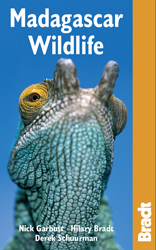
Beautifully illustrated with full color photographs throughout, Madagascar Wildlife is a celebration of the unique fauna of a remarkable island and the perfect accompaniment to Bradt's popular general travel guide, Madagascar.
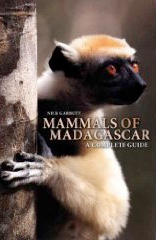
This portable guide offers a full survey of all Madagascar's mammals, both endemic and introduced, including many newly identified species. With vivid color photographs, line illustrations, and maps, Mammals of Madagascar: A Complete Guide is an essential book for any visitor.


GEAR

  • Madagascar Wildlife T-shirt
  • Dancing lemurs T-shirt
  • Madagascar Chameleons Calendar
  • Madagascar wildlife bag


    home | photos index | search | about | contact

    Unless otherwise noted, all content and images are the property of Rhett Butler, content copyright 2004-2008.
    All rights reserved.