Home
 About Madagascar
  Maps
  FAQs
  People
  History
  Environment
 Flora
 Wildlife
  Birds
  Fish
  Frogs
  Invertebrates
  Lemurs
  Mammals
  Reptiles
 Places
  Antananarivo
 Conservation
  ANGAP
  Parks
  Guides
  News
 Photos
 Educational
 Media resources
 Madagascar News
 Store
 Madagascar Travel
 About the site
 How to help
 Books
 Links
 Contact


Lemur News


Rosewood traffickers busted in Madagascar
(10/28/2009) Authorities in Madagascar have sacked a local official, arrested several businessmen, and issued fines following the discovery of illegally harvested rosewood logs aboard a ship, reports L'Express de Madagascar.


Government decree sanctions trafficking of rainforest timber in Madagascar
(10/07/2009) A new decree by Madagascar's transitional government may fuel continued destruction of the country's tropical forests and biodiversity, warns a statement issued jointly by a dozen leading scientific and conservation groups.


Good news for the rarest lemur
(10/07/2009) A scientific expedition has found one of the Madagascar's rarest lemurs in a region where it was once thought to be extinct, report conservationists.


Innovative reforestation project threatened by 'regime change' in Madagascar, an interview with Rainer Dolch
(09/16/2009) In Madagascar the TAMS Program (Tetik'asa Mampody Savoka, meaning "the project to bring back the forest") is under threat due to the new government's unwillingness to provide funding. The current government, after gaining power in a coup this year, has frozen all funds slated for the project and has yet to sign a carbon credit agreement with the World Bank which would bring much needed funding. "It remains to be seen if the recognition or not of Madagascar's transitional Government will lead to signing the contract with the World Bank in the near future. This is of course essential for the continuity of the project and its future," Rainer Dolch told Monagaby.com in an interview.


Crowned sifaka population on the verge of local extinction: dispatch from the field
(09/08/2009) A small group of crowned sifaka lemurs Propithecus coronatus have been located in the corridor d’Amboloando-Dabolava, Miandrivazo district-Madagascar, but are immediately threatened with local extinction. The small, fragmented, and isolated forest shelters a group of only six adults and one baby. Interviews with local people revealed that once several groups of the species resided in the corridor, and even last year, about 20 individuals were still found there. However, within one year, the population dropped from 20 to 6 individuals.


Destruction worsens in Madagascar
(08/20/2009) Armed bands are decimating rainforest reserves in northeastern Madagascar, killing lemurs and intimidating conservation workers, despite widespread condemnation by international environmental groups.


Appalling photos reveal lemur carnage in Madagascar [warning: graphic images]
(08/20/2009) New pictures released by Conservation International depict a troubling development in Madagascar: the emergence of a commercial bushmeat market for lemurs. In the aftermath of a March coup that saw Madagascar's president replaced at gunpoint by the capital city's mayor, Madagascar's reserves — especially in the northern part of the country — were ravaged by illegal loggers. Armed bands, financed by foreign timber traders, went into Marojejy and Masoala national parks, harvesting valuable hardwoods including rosewood and ebonies. Without support from the central government — or international agencies that pulled aid following the coup — there was no one to stop the carnage. But now it emerges that timber wasn't the only target.


Lessons from the crisis in Madagascar, an interview with Erik Patel
(08/11/2009) On March 17th of this year the President of Madagascar, Marc Ravalomanana, resigned his post. This made way for Andry Rajoelina, mayor of Madagascar’s capital, to install himself as president with help from the military. The unrest and confusion that usually accompanies such a coup brought disaster on many of Madagascar's biological treasures. Within days of Ravalomanana's resignation, armed gangs, allegedly funded by Chinese traders, entered two of Madagascar’s world-renowned national parks, Marojejy and Masoala parks, and began to log rosewood, ebonies, and other valuable hardwoods. The pillaging lasted months but the situation began to calm down over the summer. Now that the crisis in Madagascar has abated—at least for the time being—it’s time to take stock. In order to do so, Mongabay spoke to Erik Patel, an expert on the Critically Endangered Silky Sifaka and frequent visitor to Madagascar, to find out what the damage looks like firsthand and to see what lessons might be learned.


Photos: 5 baby lemurs born at the Bronx Zoo
(07/23/2009) Five baby lemurs have been born at the Bronx Zoo's Madagascar exhibit in the year since it opened, reports the Wildlife Conservation Society.


Forest Recovery Programs in Madagascar
(06/01/2009) Despite being one of the last habitable land masses on earth to be settled by man, Madagascar has lost more of its forests than most countries; less than 10% of its original forest cover now remains, and much of that is degraded. Political turmoil that erupted earlier this year continues to rumble on and the ensuing lawlessness has created the opportunity for illegal logging syndicates to plunder national parks, most notably Marojejy and Masoala, for valuable hardwoods and wildlife.


Conservation groups condemn 'open and organized plundering' of Madagascar's natural resources
(03/30/2009) Eleven conservation organizations—including WWF, CI, and WCS—have banded together to condemn logging in Madagascar's world renowned parks during a time of political crisis. Taking advantage of the turmoil after interim president Andry Rajoelina took control of the country in a bloodless coup from former president Marc Ravalomanana on March 17th, pristine forests have been plundered for valuable wood, wildlife trafficking has increased, and illegal mining operations have begun say the conservation organizations.


Political turmoil in Madagascar threatens lemurs, parks
(03/19/2009) Political turmoil in Madagascar has wrecked the country's emerging ecotourism industry and is now threatening to undo decades of conservation work. Conservation in Madagascar is highly dependent on income from tourism. Half of park entrance fees are returned to communities living in and around protected areas. Without this source of income, locals in some areas may turn to conservation areas for timber, fuelwood, agricultural land, and wildlife as food and for export.


Nickle mine in Madagascar may threaten lemurs, undermine conservation efforts
(01/21/2009) One of the world's largest nickel mines will have adverse impacts on a threatened and biologically-rich forest in Madagascar, say conservationists. The $3.8 billion mining project, operated by Canada's Sherritt, will tear up 1,300 to 1,700 hectares of primary rainforest that houses nearly 1,400 species of flowering plants, 14 species of lemurs, and more than 100 types of frogs. Many of the species are endemic to the forest. While Sherritt says on its web site that is working to minimize its environmental impact, including moving endangered wildlife, replanting trees, and establishing buffer zones near protected areas, conservationists say that efforts are falling short.


Madagascar denies 'land grab' by South Korean conglomerate
(11/22/2008) Officials from Madagascar are denying they have reached an agreement to turn over half the island nation's arable land to a South Korean corporation for food production, reports Reuters. The controversial deal — which would have paid Madagascar nothing and turned over 1.3 million hectares to produce corn and palm oil for export at a time when one-third of country's children are malnourished — was reported last week by the Financial Times.


An interview with ringtailed lemur expert Alison Jolly
(10/06/2008) Madagascar has more than 100 types of lemurs, but the most famous species is the ringtailed lemur, a primate found widely in the southern part of the Indian Ocean island. The world's leading expert on ringtailed lemurs is Alison Jolly, presently a Visiting Scientist at the University of Sussex in the UK. Since arriving on the Indian Ocean island in 1963, Jolly has documented the behavior and population dynamics of ringtailed lemurs in Berenty, a small private reserve of gallery forest amid a sea of desert-like spiny forest in southern Madagascar.


Dell becomes carbon neutral by saving endangered lemurs
(08/06/2008) Dell, the world's largest computer maker, announced it has become the first major technology company to achieve carbon neutrality.


Developing the world's most sophisticated program for mapping endangered species
(08/04/2008) It was big news in April when a comprehensive map of Madagascar's rich and unique biodiversity was unveiled. The project managed to map ranges of 2,315 species across an island larger than France. Such detailed mapping could not have happened without the aid of Steve Phillips. A researcher at AT&T, Phillips developed the software that made such detailed and expansive mapping possible.


Population of critically endangered lemurs discovered in Madagascar
(07/22/2008) Scientists in Madagascar have discovered a population of greater bamboo lemurs (Prolemur simus), a critically endangered species of primate, in an area more than 400 kilometers away from its only known refuge, reports conservation International.


Tiny lemur species discovered in Madagascar
(07/14/2008) Researchers have discovered a previously unknown species of mouse lemur on the island of Madagascar. The find brings the global number of mouse lemurs to 16.


Lemurs are key to health of Madagascar's rainforests
(06/12/2008) Lemurs play a key role in the health of Madagascar's tropical rainforests said a renowned primatologist speaking at a meeting of conservation biologists in Paramaribo, Suriname.


Madagascar signs big carbon deal to fund rainforest conservation
(06/11/2008) Madagascar will sell more than nine million tons of carbon offsets to fund rainforest conservation in a newly established protected area. conservationists say the deal protect endangered wildlife, promote sustainable development to improve the economic well-being of people living in and around the park area, and help fight global warming.


Madagascar's deforestation rate drops 8-fold in parks
(03/10/2008) Madagascar's deforestation rate in protected areas has fallen by eight-fold since the 1990s according to conservation International and the Malagasy government.


Aye-aye diverged from other lemurs 66M years ago
(02/25/2008) The aye-aye -- a bizarre, nocturnal lemur that taps on trees with its fingers to find its insect prey -- was the first of its family to branch off from the rest of the lemur line some 66 million years ago, report Duke researchers writing in the March 1 issue of Genome Research.


Photos: rare aye-aye lemur born at Bristol Zoo Gardens
(01/16/2008) Born on November 23rd, 2007 at Bristol Zoo Gardens this baby Aye-aye was given the name Raz. According to the EDGE (Evolutionary Distinct and Globally Endangered) organization this is only the second Aye-aye to be hand raised in the UK.


UNESCO lists rainforest parks of Madagascar as Heritage sites
(07/02/2007) UNESCO has listed six rainforest parks in Madagascar as World Heritage sites. The announcement comes as the Indian Ocean island nation has moved aggressively to protect its biologically-rich forests from further degradation.


conservation is saving lemurs and helping people in Madagascar
(05/07/2007) Madagascar, an island nation that lies off the coast of southeastern Africa, has long been famous for its unique and diverse species of wildlife, especially lemurs--primates found nowhere else on the planet. In recent years, the island country has also become world-renowned for conservation efforts that are succeeding in spite of extraordinary pressures from a poor population that relies heavily on forest burning for basic subsistence. A large part of this success is due to the early efforts of Patricia Wright, a primatologist who has been working in the country for more than 20 years. Wright led the effort to launch the country's leading protected area and helped Madagascar become a leading global example of conservation despite its economic adversity.


Lemurs at risk due to invasion of feral beasts, global warming
(02/07/2007) The lemurs of Madagascar are among the world's most threatened primates. Extensive habitat destruction, hunting, and the introduction of alien species have doomed dozens of species to extinction since humans first arrived on the island within the past 2000 years. Most of the casualties were Madagascar's largest lemurs -- today the biggest lemur is but a fraction of the gorilla-sized giants that once ruled the island. Despite this relative impoverishment of megafauna, Madagascar still boasts nearly 90 kinds of lemurs, all of which are unique to the island (save one species that was probably introduced to some nearby islands). Lemurs display a range of unusual behvaiors from singing like a whale (the indri) to sashaying across the sand like a ballet dancer (the sifaka). Interest in lemurs has helped Madagascar become a global conservation priority, though they are still at risk. Continued deforestation, scattered hunting, and looming climate change all pose significant threats to some lemur populations. One largely unexamined threat comes from introduced species such as the Indian civet and mongoose, but especially dogs and cats that have become feral.


In search of wildlife, while dodging leeches, in Madagascar's unexplored rainforest
(02/05/2007) It is called a rainforest for a reason--because it rains.... and rains. As my field partner, Angelin Razafimanantsoa, and I make our way down muddy mountainsides in the endless downpour, we stop only long enough to pick squirming, bloodthirsty leeches off each other's face. Hours pass as we wade through knee-deep streams rushing over smooth, slippery rocks and thick forest stands. Seven hours ago, we anticipated arriving at our next base camp in three hours' time. Now, as night is falling, it seems we have at least five hours more to go.


Lemurs communicate by scent
(01/29/2007) Ringtailed lemurs can recognize each other by scent according to a study published in the current issue of the journal Animal Behaviour. The research, conducted by Elizabeth S. Scordato and Christine M. Drea of Duke University, looked at olfactory communication in the ringtailed lemur, a charismatic primate that forms complex social groups led by a dominant female, so see what information is contained within the scent marks of the species.


3 new lemur species identified in Madagascar
(11/27/2006) Genetic analysis has revealed three previously unknown species of lemurs on the Indian Ocean island of Madagascar. The newly described lemurs are all mouse lemurs, one of the world's smallest primates. These lively lemurs are found in virtually all of Madagascar's forests where they feed on insects, fruit, and plant sap. Nocturnal, mouse lemurs betray their presence with high-pitched chirps.


Lemur conservation in Madagascar requires poverty alleviation initiatives
(11/05/2006) Madagascar, an island larger than France that lies off the southeastern coast of Africa, is perhaps best known for its lemurs--primates that look something like a cat crossed with a squirrel and a dog. Lemurs, which are found naturally only in Madagascar, serve as a charismatic representation of the island's biodiversity and its problems. Since the arrival of humans some 2000 years ago from southeast Asia, Madagascar has lost all of its mega fauna and more than 90 percent of its wildlands. Today forest clearing for agriculture and hunting continues to put lemurs and other endemic species at risk. The good news is that because of Madagascar's biodiversity, the island has become a top priority for global conservation. At the forefront of these efforts is the Madagascar Fauna Group (MFG), an international consortium of zoos and related organizations that work to protect Madagascar's wildlife and ecosystems, and the Duke University Lemur Center, the one of the world's leading lemur research facilities. Charlie Welch, currently a research scientist at the Duke University Lemur Center, recently answered some questions on his experiences in lemur conservation. Welch, along with his wife Andrea Katz, has worked in Madagascar for 17 years and helped transform conservation efforts in the country.


Climate Change Threatens Lemurs
(09/18/2006) Tropical rainforests are among the most stable environments on Earth, but they are still no match for global climate change. Dr. Patricia Wright, the widely admired primatologist and Professor of Anthropology at Stony Brook University, finds that climate change could mean the difference between survival and extinction for endangered lemurs.


Orangutans and chimps are smarter than monkeys and lemurs
(08/01/2006) The great apes are the smartest of all nonhuman primates according to scientists at Duke University Medical Center. The researchers found that orangutans and chimpanzees consistently outperformed monkeys and lemurs on a variety of intelligence tests, conclusively proving that apes are more intelligent than monkeys and prosimians.


Rare indri lemur born in forest reserve in Madagascar
(07/13/2006) A rare lemur known for its haunting whale-like call has given birth in a reserve outside its native forest. The news is significant because the Indri, as the world's largest living lemur is known, has traditionally done poorly when kept in captivity or introduced to outside its montane forest in Madagascar. The birth occurred at Palmarium, a small private reserve of lowland tropical forest established by a tour operator in Madagascar, and provides further hope for the successful conservation of the endangered species.


3 new lemurs named in Madagascar
(06/21/2006) To recognize an internationally renowned primatologist and champion of Madagascar's unique biodiversity, scientists who discovered three new species of mouse lemur on the island nation have named one in honor of Russell A. Mittermeier, the president of conservation International.


Why does Madagascar have so many unique animals?
(05/24/2006) Scientists have developed the first comprehensive theory to explain Madagascar's rich biodiversity. Madagascar, larger than California and about size the size of Texas or France, is the world's fourth largest island. Isolated in the Indian Ocean off the coast of southern Africa, about 70% of the estimated 250,000 species found on the island exist nowhere else on the globe. The island is home to such evolutionary oddities as lemurs, a group of primates endemic to the island; brilliantly colored lizards including geckos and chameleons; tenrecs, spiny hedgehog-like creatures; and the fossa, a carnivorous animal that looks like a cross between a puma and a dog but is closely related to the mongoose.


Madagascar establishes new park system to protect lemurs, benefit people
(01/17/2006) Madagascar has created a new agency for managing the parks of the Indian Ocean island nation. The System of Protected Areas of Madagascar, or SAPM, simplifies the legal process used to create a protected areas, while providing for flexibility for local people to earn a living from conservation activities.


Lemur land, Madagascar now protected
(01/08/2006) With the official establishment of the Makira Protected Area last week, the government of Madagascar has brought the total area of land and marine zones under protection to one million hectares.


Humans hunted giant lemurs to extinction
(11/14/2005) Madagascar's first inhabitants probably hunted the island's largest animals to extinction according to research published in the November issue of the Journal of Human Evolution.


Rain key to survival of baby lemurs
(11/14/2005) Researchers studying lemurs in Madagascar have discovered a link between tooth deterioration and rainfall amounts that suggests long-lived mammals may be particularly sensitive to changing environmental conditions--and that reproduction and infant survival is linked to tooth wear.


Lemur species named after British comedian
(11/12/2005) Researchers from the University of Zurich have named a newly discovered species of lemur after British comedian John Cleese in honor of his work with the primates from Madagascar.


Two tiny lemur species discovered in Madagascar
(08/09/2005) German and Malagasy primatologists have discovered two new species of lemurs, naming one of them after Steve Goodman, a Field Museum scientist who has devoted nearly two decades to studying the animals of Madagascar.


Lemur hunting persists in Madagascar, rare primates fall victim to hunger
(07/17/2005) While it has been illegal to kill or keep lemurs as pets since 1964, lemurs are hunted where they are not protected by local taboos. Many lemurs are particularly easy targets for hunting because evolution has rendered them ecologically naive in that without natural predators over the majority of their existence, they are less fearful than they should be.


Madagascar lemurs descended from single primate ancestor, finds study
(07/11/2005) Yale biologists have managed to extract and analyze DNA from giant, extinct lemurs, according to a Yale study published in a recent issue of the Proceedings of the National Academy of Sciences. Evolutionary analysis of the DNA obtained from the extinct giants reveals that they, like the living lemurs, are descended from a single primate ancestor that colonized Madagascar more than 60 million years ago.


Dancing lemur attracts tourists to island of Madagascar
(05/30/2005) In the dry deciduous forests of south western Madagascar there lives a lemur that loudly cusses but "dances" like a ballet performer. Verreaux's sifaka is among the most popular of lemur species, a group of primates endemic to islands off the southeastern coast of Africa. While threatened, Verreaux's sifaka is easily spotted is several of Madagascar's more accessible parks.


Seeking the world's strangest primate on a tropical island paradise
(04/17/2005) Seeking the world's strangest primate on a tropical island paradise


WILDMADAGASCAR.ORG
WildMadagascar.org aims to raise interest in Madagascar, a land of cultural and biological richness

Madagascar
Madagascar Pictures
Madagascar News
People of Madagascar
About the site
Educational materials
Help Madagascar
In French


SUPPORT
You can help support wildmadagascar.org by using this link to buy from Amazon.com.


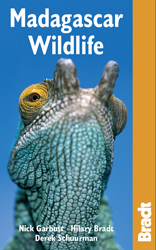
Beautifully illustrated with full color photographs throughout, Madagascar Wildlife is a celebration of the unique fauna of a remarkable island and the perfect accompaniment to Bradt's popular general travel guide, Madagascar.
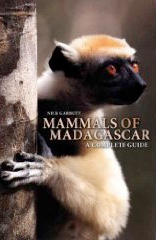
This portable guide offers a full survey of all Madagascar's mammals, both endemic and introduced, including many newly identified species. With vivid color photographs, line illustrations, and maps, Mammals of Madagascar: A Complete Guide is an essential book for any visitor.


GEAR

  • Madagascar Wildlife T-shirt
  • Dancing lemurs T-shirt
  • Madagascar Chameleons Calendar
  • Madagascar wildlife bag


    home | photos index | search | about | contact

    Unless otherwise noted, all content and images are the property of Rhett Butler, content copyright 2004-2008.
    All rights reserved.